Global Sourcing Season: OEM & ODM furniture hardware for importers and cabinet brands
0%

Kitchen Cabinet Hinges rarely draw attention in a showroom. Their performance becomes obvious after months of opening and closing: a door stays aligned, moves quietly, and closes without a hard knock. As industrial designer Charles Eames put it, “The details are not the details. They make the design.” His design principle fits cabinet hardware well, even though he was not a hinge-industry specialist.

China is home to many cabinet-hinge manufacturers and suppliers, but a polished catalog alone proves little. Buyers should compare hinge materials, finish consistency, opening angles, adjustment range, load ratings, and documented cycle-test results. Ask for samples. Check the screw holes, cup fit, and soft-close action on an actual cabinet door. Small differences matter. A hinge may look identical in a product photo yet behave differently under daily use.

This guide introduces leading Kitchen Cabinet Hinges manufacturers in China and the factors that help distinguish them. It considers product range, manufacturing capabilities, quality controls, customization, and export experience. Treat rankings as a starting point, not a guarantee. Supplier claims need verification, and available evidence can vary. One detail is easy to overlook: the best choice depends on door weight, cabinet construction, installation conditions, and service expectations. A useful comparison should make those trade-offs visible, rather than simply praise every supplier.
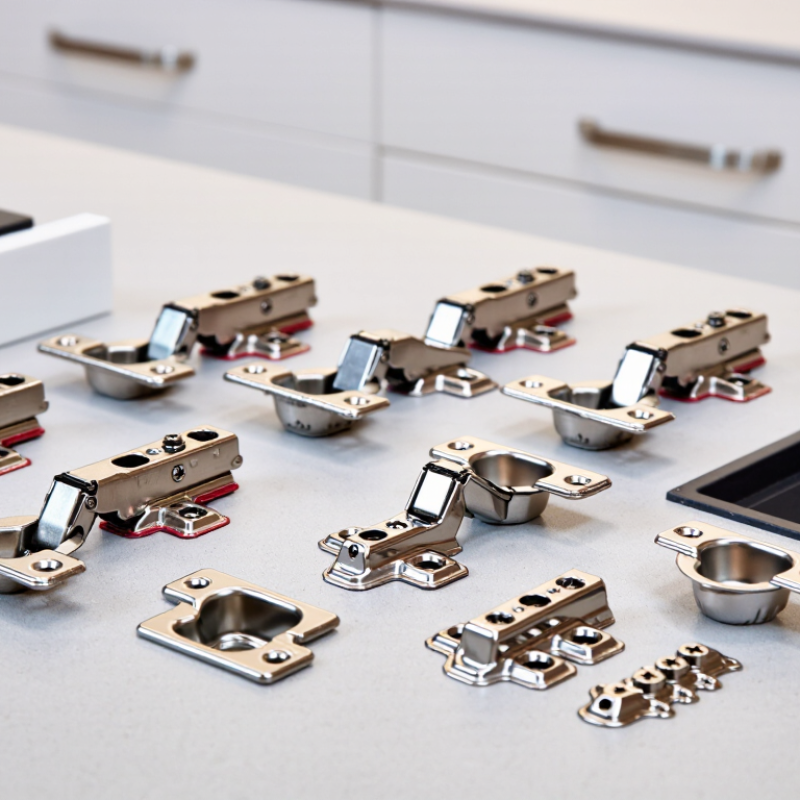
Top Kitchen Cabinet Hinges Manufacturers in China

Types and Functions of Kitchen Cabinet Hinges

Kitchen cabinet hinges determine how a door opens, rests, and closes. Concealed cup hinges sit inside the cabinet, keeping the exterior clean. Many models allow small height, depth, and side-to-side adjustments after installation. Overlay and inset designs suit different door positions, so measure the cabinet and door before choosing. Fit comes first.

Visible butt hinges offer a simple option, but their mortises need careful cutting. Soft-close hinges use a damper to slow the door near closure; they can reduce slamming, though they do not fix a crooked door. Some concealed hinges include this feature, while others do not. Small details matter. Check the hinge’s load rating, opening angle, mounting style, and compatibility with the cabinet frame. A tall, heavy door may need more hinges, but the right number depends on its size and weight. Steam and cooking residue can also affect hardware over time, so inspect the finish and screws during routine cleaning. Not every kitchen needs soft-close hardware. It is easy to focus on convenience and overlook alignment; even a well-made hinge can feel rough when installed poorly.

China’s Kitchen Cabinet Hinge Manufacturing Industry

China’s kitchen cabinet hinge industry is part of a broad furniture manufacturing base. The National Bureau of Statistics reported 655.7 billion yuan in operating revenue for China’s furniture manufacturers above designated size in 2023. That figure covers the furniture sector, not hinge sales. It offers context, but should not be mistaken for a hinge-market estimate.

Production combines precision stamping, metal forming, surface treatment, spring assembly, and inspection. A hinge may look simple, yet a small shift in cup depth can affect door alignment. Factories commonly make concealed hinges in several opening angles and overlay configurations. Buyers should check material thickness, adjustment range, corrosion resistance, and tested opening cycles—not just unit price. Small parts matter.

The industry’s scale supports flexible sourcing, from standard models to custom dimensions. Still, supplier capability varies, and a polished sample does not prove consistent batch quality. Ask for dimensional inspection records and cycle-test methods, then compare samples against the actual cabinet material and door weight. One gap remains: public reports rarely separate hinge production from wider furniture or hardware statistics. That makes precise industry-size claims difficult to verify.

Leading Kitchen Cabinet Hinge Manufacturers in China

Leading kitchen cabinet hinge manufacturers in China supply hardware for compact apartments, family kitchens, and large cabinetry projects. Their product ranges may include concealed hinges, soft-close models, and options for different door overlays. A useful supplier conversation goes beyond price. Ask about opening cycles, adjustment range, corrosion resistance, and the materials used in springs and mounting plates.

Look closely at samples. Open and close each hinge several times, then check whether the door stays aligned and closes smoothly. A quiet close matters in a small kitchen. So does easy adjustment. Request clear drawings, installation dimensions, and packaging details before approving an order. These records help installers avoid mismatched drilling patterns and reduce damage during shipping. Manufacturing capability varies, even among suppliers with similar catalogs, so confirm which processes are handled in-house.

A polished sample is not proof of consistent production. It is worth asking how the manufacturer checks batches and handles defects, then reviewing the answers against written specifications. Some buyers focus too heavily on the soft-close feel; I would also examine screw fit and plate stability. These details are easy to overlook. For custom projects, discuss finish, load requirements, test methods, and lead times early. A small adjustment may affect the whole cabinet layout.

Manufacturing Capabilities and Quality Standards

Top Kitchen Cabinet Hinges Manufacturers in China
Manufacturing Capabilities and Quality Standards

A capable hinge factory controls each step, from steel-coil inspection to stamping, riveting, finishing, and final assembly. Buyers should check die maintenance, dimensional records, and how factories trace batches. Small details matter. A cup that sits slightly off-center can leave a visible cabinet gap.

Quality checks should reflect the intended use. Ask for opening-and-closing cycle results, load-test conditions, and corrosion-test records, not just a pass certificate. Salt-spray testing can follow GB/T 10125, while acceptance limits should be agreed between buyer and supplier. ISO 9001 certification helps assess a factory’s quality-management system, but it does not prove every hinge performs well. Sample testing still matters.

The wider furniture sector offers useful context, though it is not hinge-specific. The China National Furniture Association reported 2023 operating revenue of 655.7 billion yuan for furniture manufacturers above designated size, down 4.4% year on year. That pressure makes process control and stable yields especially important. During audits, compare inspection logs with actual hinges from the production line. One weakness is easy to overlook: polished samples may hide variation across large batches. Ask to inspect random production pieces, including their screw holes, arm movement, and surface finish.

Top Kitchen Cabinet Hinges Manufacturers in China - Manufacturing Capabilities and Quality Standards

Evaluation Dimension Common Manufacturing Capability Practical Quality Checks Standards and Buyer Considerations
Product Range Manufacturing may cover concealed cup hinges, overlay and inset configurations, clip-on designs, and hinges with optional soft-close mechanisms. Confirm door thickness, overlay, opening angle, mounting-plate compatibility, and whether the soft-close function is integrated or supplied separately. Product availability and compatible dimensions vary by design. Request dimensioned drawings and installation instructions for the specific model.
Materials and Components Depending on the design, components may use steel, stainless steel, or zinc alloy. Assemblies can include hinge arms, cups, springs, pins, and damping components. Check material declarations, component dimensions, spring action, pin retention, and consistency between approved samples and production lots. Material choice should match the intended environment and load. Ask for documented material specifications rather than relying on appearance alone.
Forming and Machining Production processes can include stamping, forming, drilling, tapping, deburring, and assembly. Tooling and process controls influence repeatability. Inspect hole locations, cup and arm dimensions, burrs, edge condition, and fit with the specified mounting plate and fasteners. A 35 mm cup is common in concealed cabinet hinges, but it is not universal. Verify the required cup diameter and drilling pattern for each application.
Surface Finishing Finishing options may include nickel plating, other metallic finishes, or coatings, depending on the substrate and product specification. Review finish coverage, color consistency, visible defects, adhesion, and corrosion-test results where required by the project. ISO 9227 specifies salt-spray test methods; it does not set one universal acceptance duration for every hinge. Agree on test conditions and acceptance criteria in advance.
Adjustability and Installation Many concealed hinge designs provide adjustment in side, height, and depth directions, subject to the hinge and mounting-plate design. Check adjustment range, screw engagement, clip-on locking, door alignment, and smooth movement after installation. Adjustment range and installation requirements are model-specific. Validate the hinge on the intended cabinet construction and door geometry.
Strength and Durability Manufacturers can test representative assemblies for opening and closing performance, load behavior, and functional durability. Request test samples, cycle-test records, applied load details, failure criteria, and results for the exact product configuration. EN 15570 covers strength and durability requirements and test methods for furniture hinges and their components. Confirm the applicable edition, product scope, and acceptance criteria.
Production Quality Control Quality controls may include incoming-material inspection, in-process checks, assembly inspection, and final sampling before shipment. Ask for inspection plans, measurement records, lot traceability, sample approval procedures, and a documented process for handling nonconforming products. ISO 9001 specifies requirements for a quality management system; certification alone does not establish a hinge’s performance. Verify certificate scope and product-specific test evidence.
Supplier Verification A supplier evaluation can review production processes, inspection resources, sample control, and the ability to maintain consistent specifications across orders. Compare production samples with drawings, review current test reports, and confirm packaging, labeling, and change-control procedures. Set measurable requirements in the purchase specification. Test results and claimed certifications should be checked for product, scope, date, and issuing-body relevance.

Note: Capabilities and test criteria vary by supplier and hinge model. The standards listed are references for evaluation, not a claim that any particular manufacturer or product is certified or compliant.

How to Evaluate and Choose a Chinese Hinge Manufacturer

Choosing a Chinese cabinet-hinge manufacturer takes more than comparing unit prices. Check whether the factory controls stamping, plating, assembly, and final inspection. Ask for material specifications, load-test results, corrosion-test conditions, and batch traceability. Grand View Research’s 2023 furniture-market report valued the global market at USD 516.66 billion in 2022 and projected 5.3% annual growth through 2030. That broader market data signals demand, but it does not prove a hinge supplier’s quality.

Request samples from a normal production run, not only polished showroom pieces. Fit them to your actual cabinet door, then inspect closing movement, screw alignment, and finish under bright light. Ask how the manufacturer records defect rates and handles inconsistent batches. A factory audit can verify equipment and workflow; it cannot guarantee every shipment. I would still test incoming goods. It is easy to overlook this.

Tips: Compare written specifications, not vague claims such as “heavy duty.” Confirm sample lead time, production capacity, packaging, and replacement procedures. Record your test results against the approved sample, and revisit them after design changes.

Top Kitchen Cabinet Hinges Manufacturers in China: How to Evaluate and Choose a Manufacturer

Use these suggested weights as a practical starting point when comparing manufacturers. Prioritize product quality and durability testing, then verify materials, compatibility, customization, traceability, and delivery performance against your own requirements.

FAQS

What are the main types of kitchen cabinet hinges?

Concealed cup hinges sit inside the cabinet, while visible butt hinges remain exposed. Overlay and inset designs suit different door positions.

What should I measure before choosing a hinge?

Check the door position, cabinet frame, door weight, and required opening angle. Confirm the mounting style and drilling dimensions too. Fit comes first.

Do soft-close hinges fix a crooked cabinet door?

No. A damper slows the door near closing, but it cannot correct poor alignment. Adjust the hinge or installation instead.

How can I check a hinge sample?

Open and close it several times. Check smooth movement, door alignment, screw fit, and mounting-plate stability. Small parts matter.

How many hinges does a tall, heavy door need?

It may need more hinges, but the right number depends on door size and weight. Check the hinge’s load rating and installation guidance.

What maintenance do cabinet hinges need?

During routine cleaning, inspect the finish and screws. Steam and cooking residue can affect hardware over time. Not always obvious.

What should buyers ask a manufacturer?

Request material details, adjustment ranges, corrosion-resistance information, and opening-cycle test methods. Ask for inspection records and written specifications.

What does China’s furniture revenue figure say about hinge production?

Furniture manufacturers above designated size reported 655.7 billion yuan in operating revenue in 2023. This covers furniture, not hinge sales. It is useful context, but not a hinge-market estimate.

Conclusion

Kitchen Cabinet Hinges are essential hardware that influence a cabinet’s movement, safety, appearance, and long-term reliability. Common options include concealed, overlay, inset, soft-close, and adjustable hinges, each suited to different cabinet designs and everyday needs. China’s hinge manufacturing industry serves a wide range of projects, supported by established production networks, varied product specifications, and experience in supplying both standard and customized components.

When comparing manufacturers, buyers can assess their production capacity, material choices, engineering support, customization options, and quality-control processes. Relevant standards and inspections help verify consistency in dimensions, finish, load performance, and operating life. A careful evaluation should also consider product samples, communication, lead times, order flexibility, and after-sales support. Matching these factors to the project’s design, budget, and volume requirements can help identify a dependable supplier and select hinges that perform well over time.

Ethan

Ethan

Ethan is a professional marketing specialist with a strong understanding of the company’s products and the needs of the people who use them. Through ongoing research and close attention to product details, he turns complex information into clear, practical guidance. He regularly contributes expert......