Global Sourcing Season: OEM & ODM furniture hardware for importers and cabinet brands
0%

Choosing a reliable supplier of Furniture Hinges can shape a project’s durability, installation time, and long-term maintenance. A hinge may look like a small component, yet a cabinet door used dozens of times each day quickly exposes poor alignment, weak plating, or inconsistent movement. Small details matter.

This guide introduces manufacturers serving global buyers and explains what to compare before requesting a quotation. Look beyond product photos. Review hinge type, opening angle, load guidance, material, finish, and compatibility with the door’s thickness and overlay. For kitchens or other humid spaces, ask how corrosion resistance is tested and whether results apply to the exact finish being offered. Samples reveal much.

A dependable evaluation also considers factory quality controls, production capacity, packaging, lead times, and after-sales support. Ask for current technical drawings and clear installation instructions; even a strong hinge can perform poorly when dimensions or mounting positions are misunderstood. Where certifications or test reports are important, verify their scope and issuing organization rather than relying on broad claims. Requirements differ by destination market.

Price still matters, of course. But the lowest quotation may omit testing, stable tolerances, or consistent batch finishing. Not every supplier will suit every project, and published information can leave gaps. Treat those gaps as questions to resolve, not proof of a problem. With practical checks and direct documentation, buyers can shortlist manufacturers with greater confidence and match hinge performance to real furniture needs.
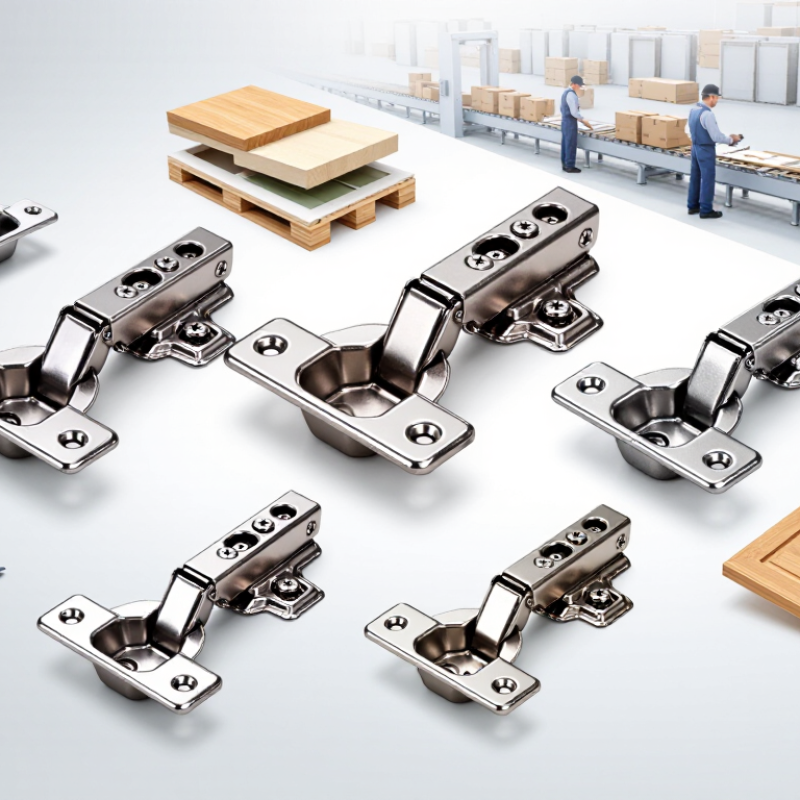
Top Furniture Hinges Manufacturers for Global Buyers

Understanding Furniture Hinges and Their Applications

Furniture hinges control how cabinet doors, wardrobes, storage beds, and fold-down desks open, close, and carry weight. A concealed hinge suits a clean cabinet face; a pivot hinge can support larger or unusual doors. Soft-close hardware reduces slamming, but it cannot correct a poorly aligned door. Small part. Big effect.

The market context is substantial, though published estimates differ. Grand View Research valued the global furniture market at USD 652.4 billion in 2023, while Fortune Business Insights estimated USD 541.52 billion for the same year. Their market scopes differ, and neither figure measures hinge sales. Still, the scale helps explain why fit and reliability matter across residential and commercial furniture. For buyers, check door thickness, overlay, opening angle, load rating, and expected use cycles. In a humid kitchen, corrosion resistance matters; in a busy wardrobe, repeated opening does. I have seen specifications focus on finish and overlook adjustment range. That is an easy miss. A hinge that allows fine alignment can save time during installation and keep door gaps even. Test samples on the actual panel material whenever possible; catalog measurements alone can be misleading.

Furniture Hinge Opening Angles: Typical Ranges

Opening angle can help buyers match a hinge to cabinet access needs. Standard concealed cup hinges commonly open around 95–110°, while wide-angle concealed cup hinges are often specified around 155–165°. These are indicative ranges; actual angles vary by hinge design, door geometry, and installation.

Key Criteria for Evaluating Furniture Hinge Manufacturers

Top Furniture Hinges Manufacturers for Global Buyers

Key Criteria for Evaluating Furniture Hinge Manufacturers

A reliable evaluation starts with the hinge’s job. Check door weight, panel thickness, opening angle, and how often the furniture will be used. A kitchen cabinet opened many times each day needs different performance evidence than a lightly used display unit. Ask what materials are used and how the finish is tested for wear or corrosion. Request load ratings and cycle-test results, then confirm how those results apply to your exact hinge model.

Tips: Request production samples, not just a showroom piece. Compare screw-hole alignment, closing action, and finish across several units. Small differences matter. Ask for written tolerances and inspection steps, too.

Manufacturing consistency deserves close attention. Ask how the supplier monitors dimensions and checks batches before shipment. Clear technical drawings, traceable specifications, and prompt answers make problems easier to resolve. Review sample lead times and production capacity against your schedule, but avoid relying on promises alone. A polished sample may not reveal batch variation, and testing cannot predict every installation condition. Discuss packaging and transit protection; a well-made hinge can still arrive scratched or bent. The best choice is not always the lowest quote. It is the supplier whose evidence, communication, and product fit your needs.

Notable Furniture Hinge Manufacturers in Global Markets

Across global markets, notable furniture hinge manufacturers are often distinguished by engineering depth, consistent production, and responsive technical support. Many supply concealed hinges for kitchen cabinets, soft-close systems for wardrobes, and compact fittings for office furniture. Their products may look similar on a sample board, but opening force, adjustment range, and cycle performance can differ noticeably.

Experienced buyers check more than catalogue dimensions. They request material specifications, load guidance, installation drawings, and test information for the intended door weight. A hinge that works smoothly on a light showroom panel may sag on a tall, solid-wood door. Ask about finish consistency, too; small color shifts can stand out across a row of cabinets. Samples help. So does a trial installation.

Manufacturers in established furniture-production regions often support export orders with varied finishes and packaging options, while newer suppliers may compete through flexible customization. Neither category is automatically better. Lead times, spare-part availability, and communication quality deserve equal attention. A polished catalogue can still leave practical questions unanswered. This is easy to overlook. A short production run can reveal alignment issues, noisy closing, or confusing adjustment screws before a large order is placed.

Top Furniture Hinges Manufacturers for Global Buyers - Notable Furniture Hinge Manufacturers in Global Markets

Furniture hinge categories and practical comparison points for international sourcing

Hinge Category Typical Design Common Furniture Applications Materials and Finishes Key Buyer Checks
Concealed cup hinge A cup fits into a bored recess in the door, with an arm connecting it to a mounting plate inside the cabinet. Kitchen cabinets, wardrobes, office cabinets, and other frameless or face-frame cabinetry. Commonly available in steel, with plated or painted finishes; stainless-steel options are also available for some applications. Confirm door overlay, cup diameter and depth, mounting pattern, adjustment range, closing action, and compatibility with the cabinet construction. Opening angle varies by model.
Butt hinge Two leaves joined by a knuckle and pin; the leaves are typically fixed to the door and frame or cabinet. Furniture doors, storage chests, utility cabinets, and projects where a visible hinge is acceptable. Available in materials such as steel, stainless steel, and brass, depending on the model and intended use. Check leaf dimensions, pin design, fixing method, door thickness, corrosion environment, and the required load capacity for the complete installation.
Continuous (piano) hinge A long hinge extending along much or all of the joint between two panels, distributing attachment points over a greater length. Storage-box lids, cabinet doors, benches, and furniture panels requiring a long hinge line. Common options include steel and stainless steel; available finishes depend on material and supplier. Specify hinge length, leaf width, thickness, pin construction, mounting-hole pattern, and whether the hinge must be cut to size.
Pivot hinge Supports a door on pivot points, commonly positioned near the top and bottom rather than along the full door edge. Selected cabinet doors, display furniture, and designs requiring a pivoting rather than conventional edge-mounted action. Material and finish vary by design; metal components are commonly used for the pivot and mounting hardware. Confirm door dimensions and weight, pivot locations, required clearances, installation tolerances, and whether the hardware suits the door and cabinet materials.
Lift-up flap hinge or stay Hardware supports an upward-opening flap; some systems include a stay or controlled-motion mechanism. Wall cabinets, overhead compartments, and furniture with upward-opening doors or flaps. Typically made with metal hinge and linkage components; finishes and mechanism options vary by product. Check flap size and weight, opening path, cabinet geometry, required holding or soft-close function, and whether the mechanism is supplied as a matched set.
Glass-door hinge Uses a clamp, plate, or other attachment designed to hold glass without relying on a conventional wood-screw fixing into the door. Display cabinets, glass-front furniture, and cabinet doors with glass panels. Metal bodies and fittings are common; available finishes depend on the design and intended interior environment. Verify glass thickness, whether drilling is required, clamp or gasket compatibility, door weight, mounting method, and the supplier’s installation instructions.

Specifications vary by model. Buyers should confirm dimensions, load ratings, installation requirements, finish details, and test documentation for the exact hinge and intended application before ordering.

Comparing Hinge Types, Quality Standards, and Customization

Furniture hinges may look minor, but the wrong type can make a cabinet door sag or scrape after months of use. Concealed hinges suit clean, adjustable cabinet fronts, while butt hinges are simple and visible. Pivot hinges support doors that rotate from top and bottom points. Soft-close models add a damper, though the mechanism needs testing with the actual door weight.

Quality is more than a polished finish. Buyers should compare load ratings, cycle-test results, corrosion resistance, and dimensional consistency. Ask which test methods were used and whether reports apply to the hinge model being quoted. Standards vary by market and application, so a certificate alone may not settle the question. Check samples for smooth movement, secure screws, and even gaps. Small defects show quickly.

Customization can cover opening angle, overlay, mounting-plate height, finish, and damping strength. Share drawings, door thickness, material, and expected use before requesting a quote. A hinge tested on a light display door may behave differently on a heavy kitchen front. I have seen specifications overlook installation variation; that is easy to regret later. Request a sample and fit it to the intended cabinet before approving a large order.

Global Sourcing, Logistics, and Supplier Selection

Global hinge sourcing depends on more than unit price. Buyers should compare opening angle, cup diameter, load rating, finish, and cycle-test results against the actual cabinet design. Small parts matter. UNCTAD’s Review of Maritime Transport 2024 reports that maritime trade grew 2.4% in 2023, while disruptions raised uncertainty on key routes. A low quote can lose its appeal when cartons arrive late or mixed-lot hinges fail inspection.

Supplier selection should test both product consistency and communication. Request dimensioned drawings, material specifications, sample sets, and batch-level inspection records. Check whether production samples match the finish and closing feel of the final shipment. The World Bank’s Logistics Performance Index 2023 found that international shipments took an average of 44 days from origin to destination, with a 10.5-day standard deviation. Build that variability into inventory plans, not just the supplier’s promised lead time. Delays happen.

For global shipments, agree in writing on packaging, carton labels, pallet dimensions, and document responsibilities before production starts. Ask suppliers to identify capacity limits and likely seasonal bottlenecks; vague answers deserve follow-up. I would also verify packing strength with a small trial shipment, since a neat factory sample says little about rough handling. No checklist removes every risk. Still, recorded tolerances, clear inspection criteria, and a named contact for shipment updates make comparisons more reliable than price alone.

FAQS

What should buyers compare when choosing a furniture hinge manufacturer?

Compare engineering support, production consistency, lead times, and spare-part availability. A polished catalogue is not enough.

Which hinge type suits a clean cabinet front?

Concealed hinges keep hardware out of sight and allow adjustment. Butt hinges remain visible, while pivot hinges rotate from top and bottom points.

How can buyers check whether a hinge suits a heavy door?

Share the door’s weight, thickness, and material with the supplier. Test a sample on the intended cabinet. Samples help.

What quality details should buyers request?

Ask for load guidance, cycle-test results, corrosion information, and dimensional specifications. Confirm that test reports cover the exact model being quoted.

What should a hinge sample reveal?

Check movement, screw security, even gaps, and closing noise. A small alignment problem can become a row of crooked doors.

Which details can manufacturers customize?

Options may include opening angle, overlay, mounting-plate height, finish, and damping strength. Send drawings and door details before requesting a quote.

Why test soft-close hinges with the actual door?

A damper may behave differently with a heavier front. Test the hinge at the intended door weight, not just on a display panel.

How can buyers reduce problems before a large order?

Start with a short production run and trial installation. Check alignment, adjustment screws, and finish consistency. I might still miss something; inspect it twice.

Conclusion

This article explores how Furniture Hinges support everyday movement, stability, and appearance across cabinets, wardrobes, desks, and other furnishings. It explains common hinge applications and outlines practical criteria for assessing manufacturers, including product consistency, material selection, testing procedures, production capacity, technical support, and the ability to meet project requirements.

The article also compares hinge types, quality expectations, and customization options, helping buyers consider factors such as opening angle, load capacity, finish, installation method, and service life. It offers a framework for evaluating suppliers in global markets and planning sourcing decisions, from requesting samples and confirming specifications to reviewing packaging, lead times, shipping arrangements, and communication. By balancing performance, cost, and dependable support, buyers can select a supplier suited to their products and long-term manufacturing needs.

Ethan

Ethan

Ethan is a professional marketing specialist with a strong understanding of the company’s products and the needs of the people who use them. Through ongoing research and close attention to product details, he turns complex information into clear, practical guidance. He regularly contributes expert......