Global Sourcing Season: OEM & ODM furniture hardware for importers and cabinet brands
0%

Choosing the best Cabinet Hinges made in China takes more than comparing prices or polished product photos. A hinge must fit the cabinet door, carry its weight, and move smoothly through repeated use. In a showroom, even a modest hinge can feel impressive. The real test comes after months of opening and closing.

This guide compares Chinese-made hinges by practical details: steel thickness, cup size, opening angle, overlay adjustment, soft-close behavior, and finish consistency. It also considers sample testing, production checks, packaging, and the supplier’s willingness to provide clear specifications. Look for steady movement, aligned doors, and dampers that close without a sharp final knock. Small details matter. A hinge that loosens, squeaks, or leaves a door uneven can turn a good cabinet into a daily irritation.

Experienced cabinet professionals often stress fit and repeatable performance over appearance alone. A useful principle for this comparison is: “Choose the hinge that stays aligned after real use, not just the one that feels smooth in a sample.” This is editorial wording, not a verified quotation from a named expert; no source material was provided to confirm an expert’s name or exact words. That distinction matters. Product claims should be checked against specifications and hands-on testing, not repeated as fact. Chinese manufacturers vary widely, so the strongest choice depends on the cabinet design, expected use, and quality controls behind each order.
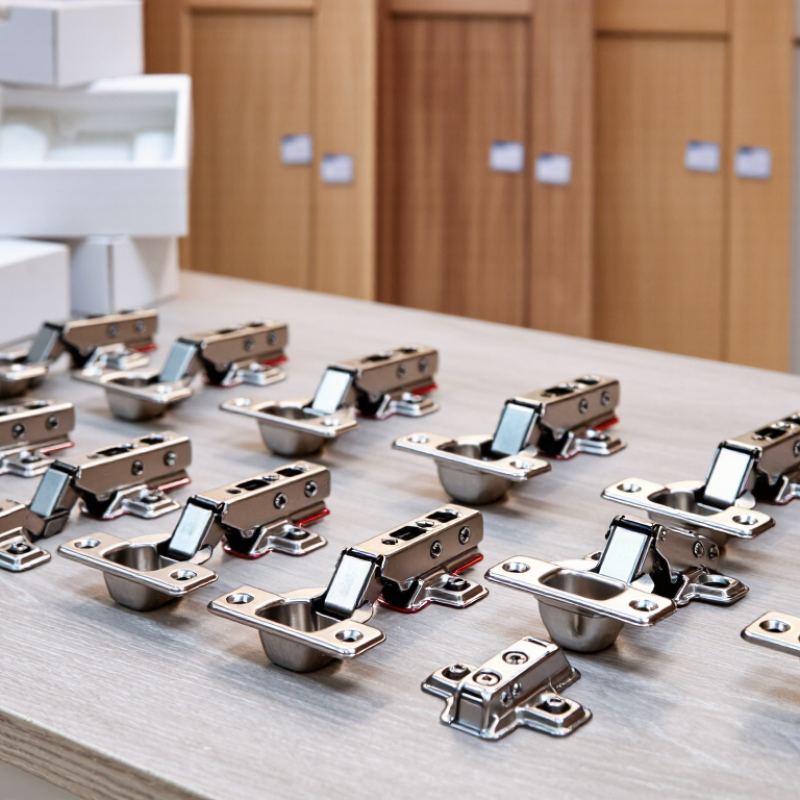
What Are the Best Cabinet Hinges Made in China?

What Makes a Cabinet Hinge Made in China High Quality?

A cabinet hinge made in China is high quality when its materials, geometry, and test results match the door’s real demands. Origin alone proves little. Look for a rigid steel or stainless-steel arm, cleanly formed edges, and a finish without thin spots near screw holes. The cup should sit flush, while adjustment screws should turn smoothly without wobbling.

Small details matter.

For objective evidence, ask for test records referencing ANSI/BHMA A156.9, the cabinet-hardware standard, which covers performance testing such as operation and load. Corrosion resistance can be assessed using ISO 9227 salt-spray methods, though salt-spray hours do not translate directly into years of kitchen use.

Check the test conditions and results, not just a “passed” claim. A hinge that feels smooth on a sample may still sag after repeated use. That part is easy to miss.

Inspect several units from the same production lot, then test them on doors matching your panel thickness and weight. Even good hardware can disappoint when installation tolerances are poor.

Which Types of Chinese-Made Cabinet Hinges Are Available?

Chinese-made cabinet hinges are available in several styles, each suited to a different cabinet design. Concealed, or European-style, hinges sit inside the cabinet and remain hidden when the door is closed. Many use a 35-millimeter cup, though dimensions should be checked against the door. They are popular for clean, modern kitchens.

Overlay hinges fit doors that cover part or all of the cabinet frame. Inset hinges support doors set flush within the frame, where careful alignment matters. Butt hinges remain visible and offer a straightforward option for traditional furniture. Some models include soft-close dampers; others are self-closing or use a simple, undamped mechanism. The difference is noticeable: a soft-close door should slow before it meets the frame, not slam shut.

There are also pivot hinges for doors that turn on upper and lower points, plus specialty hinges for corner cabinets and wide doors. Options vary in opening angle, finish, load rating, and adjustment range. Not every listing explains these details clearly. Check the cabinet layout, door thickness, and mounting method before choosing, then test a sample if possible. Small adjustments can fix a slight gap, but they cannot make an incompatible hinge fit.

How Do Materials and Designs Affect Hinge Performance?

A cabinet hinge’s material sets the limits of its daily performance. Stainless steel resists moisture well, making it practical near sinks or in humid kitchens. Plated steel can offer good value, but scratches may expose the base metal over time. Zinc alloy allows detailed shapes and smooth finishes, though heavy doors may demand a stronger design. Feel the difference. A hinge that feels solid in the hand still needs testing on the actual cabinet door.

Design matters just as much. Concealed hinges keep the exterior clean, while adjustable models help installers correct small alignment errors. Full-overlay, half-overlay, and inset doors each need compatible hinge geometry. Soft-close mechanisms can reduce slamming, but their action depends on door weight and correct adjustment. Too much resistance can make a small door feel awkward. That detail is easy to miss.

When comparing hinges made in China, check load ratings, cycle-test information, finish quality, and adjustment range rather than relying on appearance alone. Ask whether samples were tested with doors similar in size and weight to yours. Installation also affects results: uneven screw placement can cause sagging, even with a well-made hinge. I would not judge durability from one smooth opening; repeated use and humid conditions reveal more. No specification removes the need for a real fit check.

Cabinet Hinge Design: Typical Maximum Opening Angles

Hinge design affects how far a cabinet door can open. The values below are representative specifications; the actual opening angle depends on the hinge model, door, and installation.

For humid environments, corrosion-resistant materials such as stainless steel can be a useful choice. Check the hinge’s stated load capacity and installation requirements as well as its opening angle—performance depends on both material and design.

How Are Cabinet Hinges Manufactured and Quality-Tested in China?

What Are the Best Cabinet Hinges Made in China?

How Are Cabinet Hinges Manufactured and Quality-Tested in China?

A cabinet hinge may begin as cold-rolled steel or stainless-steel sheet. Stamping forms the cup and arm; deburring removes sharp edges. Parts are then plated or coated, assembled with springs and screws, and adjusted for smooth movement. Some designs use zinc-alloy components. Small tolerances matter. A crooked arm can leave a visible gap between two cabinet doors.

Quality checks should cover dimensions, coating, load, and repeated opening. Corrosion resistance can be assessed using the salt-spray method in ISO 9227. Durability testing may follow EN 15570, with cycle counts and loads agreed in the purchase specification. China National Furniture Association data reported 2023 revenue of 655.7 billion yuan for above-scale furniture manufacturers. That figure shows the sector’s scale, not hinge quality; buyers still need product-level test records. No test is perfect.

Tips: Request the test method, cycle count, sample size, and results—not just a “passed” label. Check a finished hinge on a real cabinet door, too. A slight scrape may appear only after installation.

How Can Buyers Compare Chinese Cabinet Hinge Suppliers?

Comparing Chinese cabinet hinge suppliers starts with the installed result, not a catalogue photo. Request samples in the intended overlay, opening angle, and door thickness. Check whether the hinge sits flush, moves smoothly, and holds its adjustment after repeated opening. Ask for cycle-test results, test conditions, and the exact model tested. A cycle count without a test method is hard to compare. It is an easy detail to miss.

Compare materials and finish with measurable evidence. Ask for steel grade, plating or coating specifications, corrosion-test reports, and batch inspection records. Confirm that the report covers the same hinge model and finish you plan to order. Check adjustment range and screw-hole dimensions against your cabinet drawings. A sample can look excellent; it may not represent a full production run. Request a pre-shipment inspection plan and traceability details before agreeing to order quantities.

Review delivery and quality systems separately. The World Bank’s Logistics Performance Index 2023 ranked China 19th among 139 economies, a useful country-level logistics reference, not a guarantee of factory performance. Ask each supplier for lead-time records, packaging details, and a process for handling defects. The ISO Survey tracks management-system certificates by country, but a certificate alone does not prove hinge durability. Verify its scope, validity, and issuing body. Compare suppliers using the same checklist, then test production samples before committing.

FAQS

Which hinge material suits a humid kitchen?

Stainless steel resists moisture, making it practical near sinks. Plated steel may cost less, but scratches can expose its base metal. Check the finish closely.

Does a solid-feeling hinge guarantee durability?

No. A hinge may feel sturdy in your hand but perform poorly on a heavy door. Test it on a similar cabinet door.

How does hinge design affect appearance and use?

Concealed hinges keep cabinet fronts looking clean. Adjustable hinges help correct small alignment errors. Full-overlay, half-overlay, and inset doors need compatible hinge shapes.

Can soft-close hinges work well on every door?

Their performance depends on door weight and adjustment. Too much resistance can make a small door awkward to close. Easy to miss.

What should buyers compare when choosing hinges?

Check load ratings, cycle-test details, finish quality, and adjustment range. Ask whether samples were tested with doors similar in size and weight to yours.

How are cabinet hinges typically manufactured?

Steel sheets may be stamped into cups and arms, then deburred. Parts are coated or plated, assembled with springs and screws, and adjusted. Small tolerances matter.

Which tests can reveal hinge problems?

Quality checks may cover dimensions, coating, load, and repeated opening. Salt-spray tests assess corrosion resistance. Cycle tests examine repeated use, but conditions matter.

Why test a hinge after installation?

Uneven screw placement can cause sagging, even with a well-made hinge. Open and close the door repeatedly; a slight scrape may appear after fitting. One smooth opening proves little.

Conclusion

Choosing the best Cabinet Hinges made in China means looking beyond price to the details that influence long-term performance. High-quality hinges are typically defined by consistent construction, smooth and quiet movement, reliable alignment, and suitable opening angles. Available options include concealed, butt, soft-close, and specialty hinges, each designed for different cabinet styles and installation needs. Material selection and design also matter: corrosion-resistant finishes, sturdy components, and appropriate hinge geometry can improve durability and help doors open and close evenly.

Manufacturing and quality testing provide further clues to a hinge’s dependability. Careful production, dimensional checks, cycle testing, and inspection of finishes can help ensure consistent results. Buyers comparing suppliers should consider product specifications, material information, quality-control practices, customization capabilities, communication, and sample performance—not price alone. Matching these factors to the intended application makes it easier to select hinges that offer dependable function and lasting value.

Ethan

Ethan

Ethan is a professional marketing specialist with a strong understanding of the company’s products and the needs of the people who use them. Through ongoing research and close attention to product details, he turns complex information into clear, practical guidance. He regularly contributes expert......